

What Is PRK?
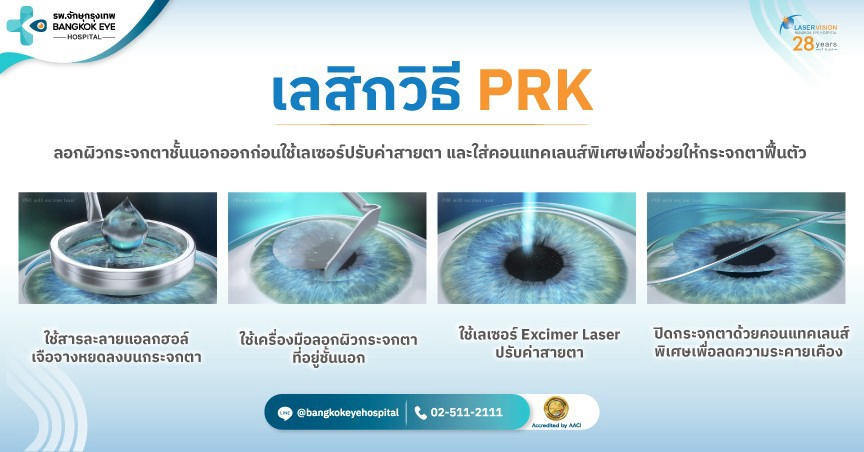
PRK (Photorefractive Keratectomy) is one of the early-generation laser vision correction techniques that continues to be used today. It can be used to correct myopia, hyperopia and astigmatism in patients whose examination results are suitable.
With PRK, the ophthalmologist first removes the outer layer of the cornea, or Epithelium. An Excimer Laser is then used to reshape the cornea according to the refractive error. A temporary Bandage Contact Lens is placed to help protect the corneal surface during recovery.
An important feature of PRK is that no corneal flap is created. PRK therefore continues to have a role as an option for patients in certain special occupations, even as newer vision correction technologies have become available.
Why May PRK Be Considered for Special Occupations?
A key feature of PRK is that vision correction is performed without creating a corneal flap. There is therefore no direct concern about a flap becoming displaced or injured by impact. This makes PRK one of the methods an ophthalmologist may consider for people with certain occupations or activities.
Groups that may be considered include military personnel and police officers, whose physical training or duties may involve impact to the face or eyes, as well as certain athletes, such as those involved in boxing, martial arts or contact sports.
For pilots and people preparing to apply for aviation-related positions, suitability of the eyes is only one consideration. The vision and eye health requirements of each organization or type of license must also be taken into account. PRK is one vision correction method that may be considered.
However, being in one of these occupational groups does not mean that everyone needs PRK. An ophthalmologist must still assess the refractive error, corneal thickness and shape, and overall eye health on an individual basis. For occupations with specific medical examination requirements, the requirements of the relevant organization should be checked before deciding on vision correction.
PRK Promotion at the Laser Vision Center
PRK promotional price 37,000 THB for both eyes, reduced from the regular price of 39,000 THB
Installment payment available for up to 10 months at 4,000 THB per month
(Subject to the terms and conditions of the banks specified by the hospital)
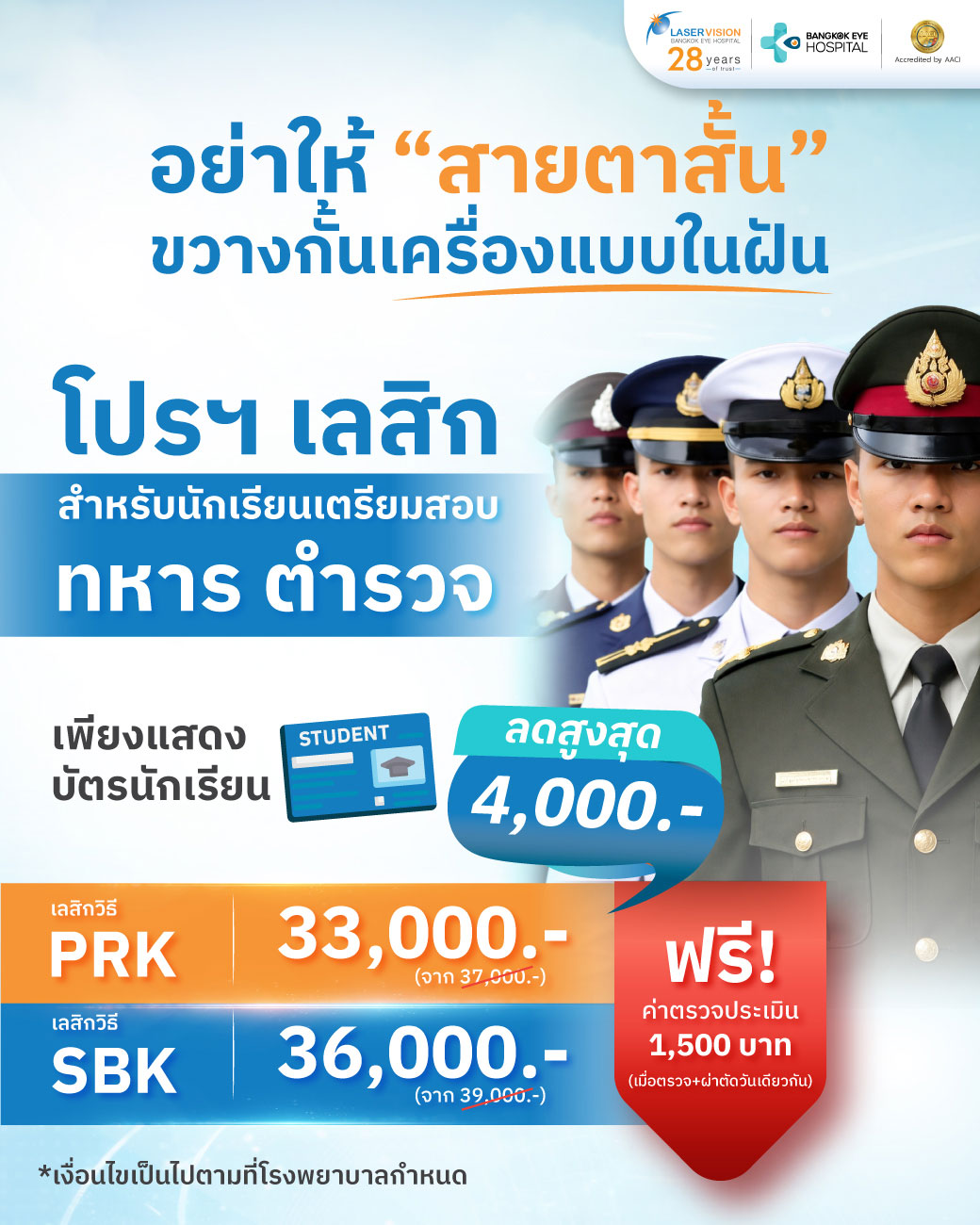
Students preparing for military or police entrance examinations can present their student identification card to receive a special price of 33,000 THB for both eyes. This special price is not eligible for installment payment.
The Promotional Price Includes
The promotional price does not include the pre-PRK HIV test fee of 300 THB.
Choose the Vision Correction Method That Is Right for You
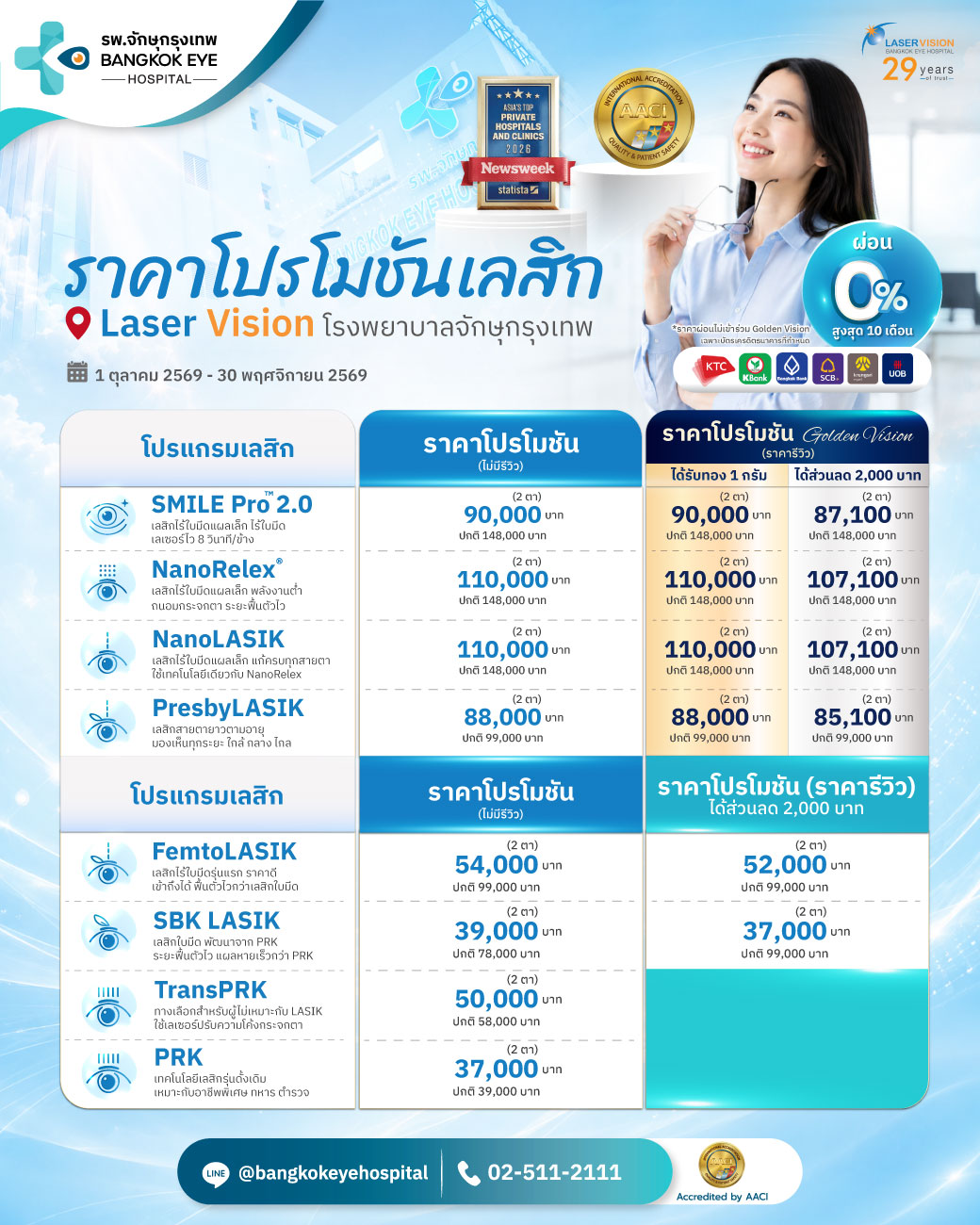
At the Laser Vision Center, Bangkok Eye Hospital, available options include PRK, TransPRK, SBK LASIK, FemtoLASIK, SMILE Pro™2.0, NanoLASIK and NanoRelex®. Having multiple techniques available does not mean that patients need to choose a treatment themselves. Instead, it allows the ophthalmologist to plan treatment according to refractive error, corneal structure, eye health, age and each individual's lifestyle.
Therefore, if you are interested in the PRK promotion, the most important starting point is to undergo an eye assessment to determine whether PRK is an appropriate vision correction method for your eyes.
Frequently Asked Questions About PRK
Who May Be Suitable for PRK?
PRK may be suitable for people with myopia, hyperopia or astigmatism whose corneal examination results are within an appropriate range. It may also be considered for some people with relatively thin corneas or those with occupations and activities where impact to the eyes needs to be taken into consideration.
Can Someone With a Thin Cornea Have PRK?
Some people with relatively thin corneas may be able to undergo PRK because PRK does not involve creating a corneal flap. However, suitability cannot be determined from corneal thickness alone. Corneal shape, refractive error and overall eye health must also be evaluated.
Can Military Personnel, Police Officers or Pilots Have PRK?
PRK is one of the vision correction methods that may be considered for people preparing for examinations or working as military personnel, police officers or pilots. However, each organization may have different vision requirements and post-treatment criteria. Applicants should therefore check the requirements of the organization they wish to apply to before deciding to undergo PRK.
How Long Is the Recovery After PRK?
After PRK, the corneal surface gradually regenerates during the initial recovery period. Patients may experience stinging, irritation, watery eyes or sensitivity to light. Vision gradually improves and may take several weeks to become more stable, depending on the individual.
How Much Does PRK Cost?
The current PRK promotional price is 37,000 THB for both eyes, reduced from the regular price of 39,000 THB. Installment payment is available for up to 10 months at 4,000 THB per month, subject to the terms and conditions of the banks specified by the hospital.
Students preparing for military, police or pilot examinations who present a student identification card can receive a special price of 33,000 THB for both eyes. This price is not eligible for installment payment.
What Examinations Are Required Before PRK?
Before PRK, the ophthalmologist will assess the refractive error, corneal thickness and shape, as well as overall eye health, to determine whether PRK is suitable for each individual.
Bangkok Eye Hospital Map
10/989 Soi Prasert-Manukitch 33, Nuanchan, Bueng Kum, Bangkok 10230
Contact Information