
 Back
BackWhat Is an Intravitreal Injection? Who Is It For, the Procedure, and Post-Injection Care


 Copied link to clipboard
- Intravitreal injection is a treatment in which medication is injected directly into the vitreous humor to treat retinal diseases, improve vision, and control retinal swelling or leakage.
- The procedure begins with an eye evaluation, followed by sterilization and local anesthesia. The ophthalmologist then precisely injects the medication into the vitreous and monitors the eye afterward for safety.
- Intravitreal injections deliver medication directly to the retina, providing rapid and targeted effects. The procedure is minimally painful, safe, and usually does not require hospital admission.
Intravitreal injection is an effective and safe treatment for retinal diseases. It involves injecting medication directly into the vitreous cavity of the eye, allowing the drug to act quickly and precisely at the affected area. Understanding the procedure can help patients feel more confident and prepared for treatment.

What Is Intravitreal Injection?
Intravitreal injection is a medical procedure used to treat various retinal and vitreous conditions. The ophthalmologist injects medication directly into the vitreous cavity located in the center of the eye so the medication can work rapidly and precisely. It is commonly used for conditions such as age-related macular degeneration (AMD), diabetic retinopathy, abnormal retinal blood vessels, retinal bleeding, and swelling.
The advantage is that the medication acts directly at the site of disease without extensive systemic circulation, reducing side effects. However, the procedure must be performed in a sterile environment by an ophthalmologist to prevent infection or complications such as inflammation or temporary increased eye pressure.
Who Is Intravitreal Injection Suitable For?
This treatment is suitable for individuals with retinal conditions caused by abnormal blood vessels, including:
- Diabetic Retinopathy, particularly diabetic macular edema, where damaged retinal blood vessels leak fluid or blood, causing blurred or distorted vision. Without treatment, permanent vision loss may occur.
- Wet Age-Related Macular Degeneration (Wet AMD), characterized by abnormal blood vessel growth under the retina that leaks fluid or blood, leading to central vision impairment. Early treatment, such as anti-VEGF injections, can slow disease progression.
- Retinal Vein Occlusion, where blockage of retinal veins causes fluid leakage, blurred vision, and potential long-term complications if untreated.
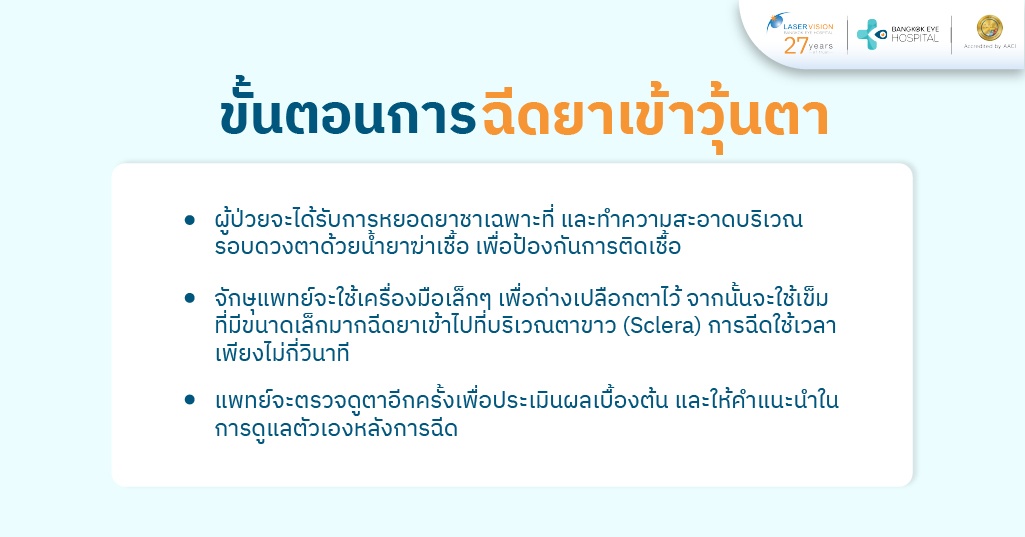
Intravitreal Injection Procedure
The procedure is quick and usually painless due to local anesthesia. Steps include:
- Local anesthetic eye drops are applied, and the eye area is disinfected to prevent infection.
- The ophthalmologist uses a small instrument to keep the eyelids open and injects medication through the sclera using a very fine needle. The injection takes only a few seconds.
- The eye is re-examined afterward, and post-treatment care instructions are provided.
Benefits of Intravitreal Injection
Intravitreal injections are highly effective because the medication targets the retina directly, providing fast and precise results. The procedure is minimally invasive, takes only minutes, involves little discomfort, and patients can usually return home immediately. It is considered a global standard treatment with a high safety profile.

Post-Injection Precautions
Proper post-injection care helps reduce side effects and promotes faster recovery:
- Avoid rubbing or scratching the eyes for at least 3–5 days to prevent infection.
- Avoid getting water into the eyes for 2–3 days; use a damp cloth instead of washing the face directly.
- Use prescribed eye drops exactly as directed and wash hands before and after application.
- Get adequate rest and avoid prolonged screen use.
- Avoid heavy lifting, strenuous exercise, or bending the head downward during the first week.
- Avoid swimming or exposure to potentially contaminated water to reduce infection risk.
Medications Used for Intravitreal Injection
In addition to advanced retinal surgery, Bangkok Eye Hospital utilizes Anti-VEGF medications to inhibit abnormal blood vessel growth and reduce retinal swelling, which are key causes of blurred vision in diabetic retinopathy and age-related macular degeneration. Common internationally recognized medications include Lucentis and Eylea.
To provide effective and cost-efficient treatment, Bangkok Eye Hospital primarily uses Avastin and Vabysmo, each offering specific advantages depending on the patient’s condition.
Avastin
Avastin is widely used worldwide due to its effectiveness and affordability, making long-term treatment more accessible for patients.
Vabysmo
Vabysmo represents a newer innovation using dual-pathway technology that inhibits both VEGF and Ang-2 proteins, reducing inflammation and abnormal vessel fragility. It often provides longer-lasting retinal dryness and may reduce the frequency of injections.
At Bangkok Eye Hospital, retinal specialists carefully evaluate each patient to determine the most suitable medication based on eye condition and lifestyle, ensuring safety and optimal visual outcomes.

Why Choose Intravitreal Injection at Bangkok Eye Hospital?
Bangkok Eye Hospital provides comprehensive retinal care with advanced technology and experienced retinal specialists. Services include detailed eye examinations, modern surgical techniques, intravitreal injections, close post-treatment follow-up, personalized treatment guidance, and comfortable care throughout the treatment process.
Summary
Intravitreal injection is an effective treatment for retinal diseases such as diabetic macular edema, wet AMD, and other vascular retinal conditions. The procedure is quick, minimally painful due to local anesthesia, and allows medication to act directly on the retina for rapid results. Patients typically go home the same day without hospitalization. For comprehensive retinal care, visit Bangkok Eye Hospital.
Related Articles
- Recognizing Retinal Swelling Symptoms
- Retinal Hole Causes and Treatment
- Subconjunctival Hemorrhage: Causes and Treatment
Frequently Asked Questions (FAQ)
Common questions about intravitreal injections to help patients better understand this treatment.
How many injections are needed?
The number of injections depends on the disease type and severity. Some patients may require a single injection, while others need repeated treatments as advised by their ophthalmologist.
How much does an intravitreal injection cost?
Costs vary depending on the medication type, disease severity, number of injections required, and retinal condition. Consultation with an ophthalmologist is recommended for accurate pricing.
How long does recovery take?
Vision improvements may begin within 1–2 weeks after injection, though recovery varies depending on individual response and disease severity. Follow-up treatments may be necessary.