

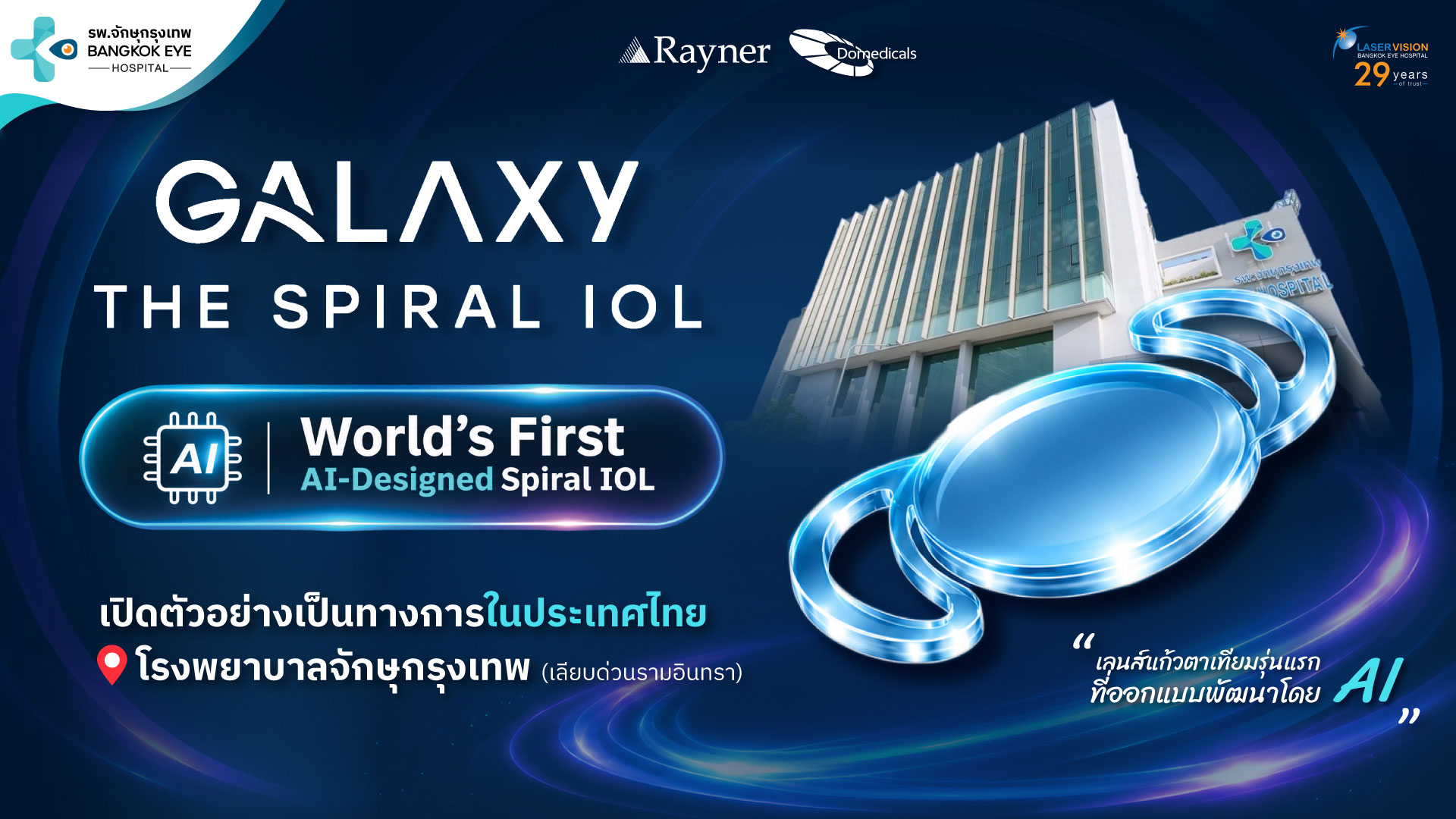
A new approach to vision correction with an innovative intraocular lens designed using artificial intelligence (AI) to provide continuous vision across far, intermediate, and near distances while reducing visual disturbances.
Bangkok Eye Hospital is the first hospital in Thailand to introduce GALAXY AI (RayOne Galaxy), an intraocular lens developed by Rayner, for cataract surgery and refractive lens exchange to correct long-sightedness. This marks an important step in bringing international innovations to cataract treatment and vision correction in Thailand.
From Global Innovation to Thailand's First GALAXY AI Implantation
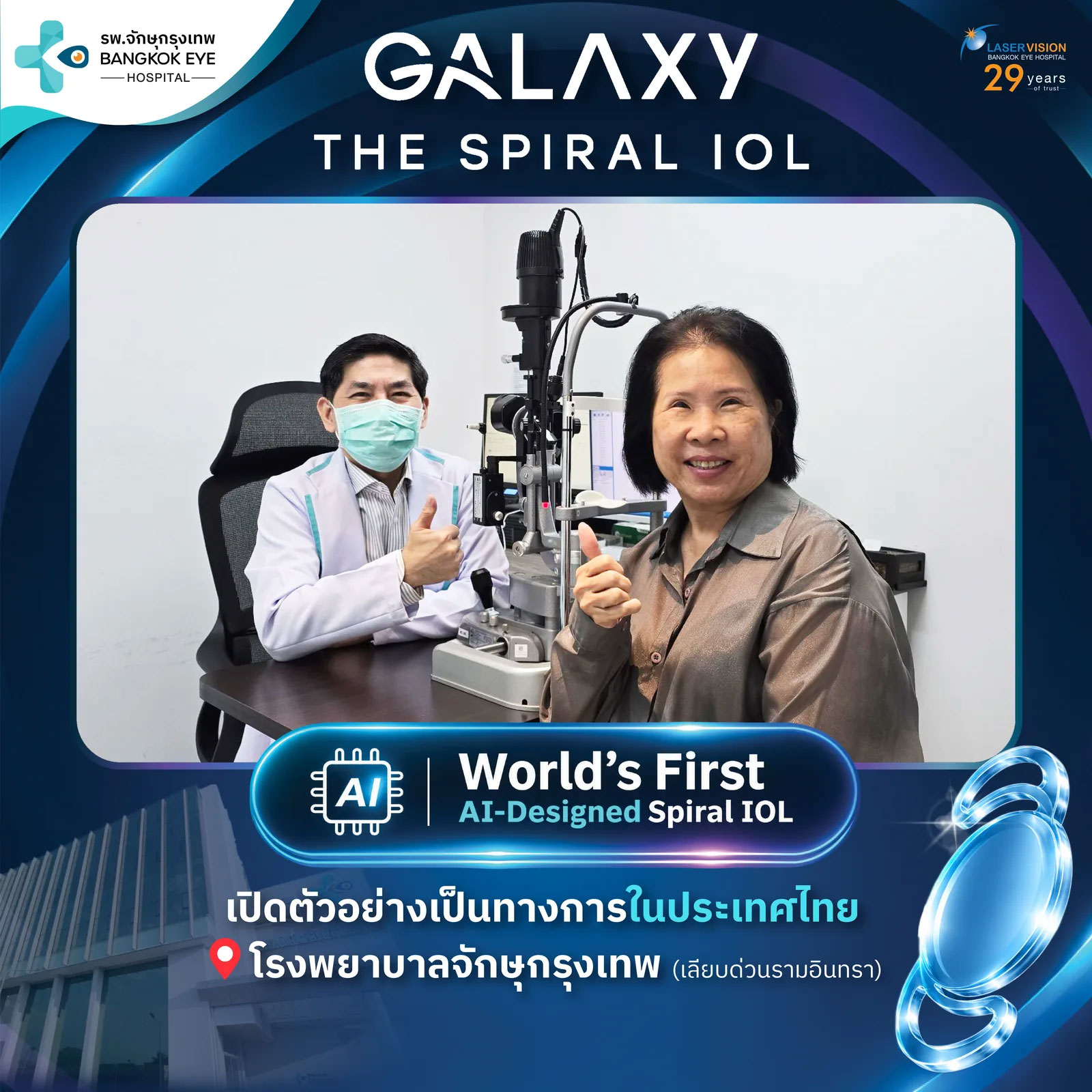
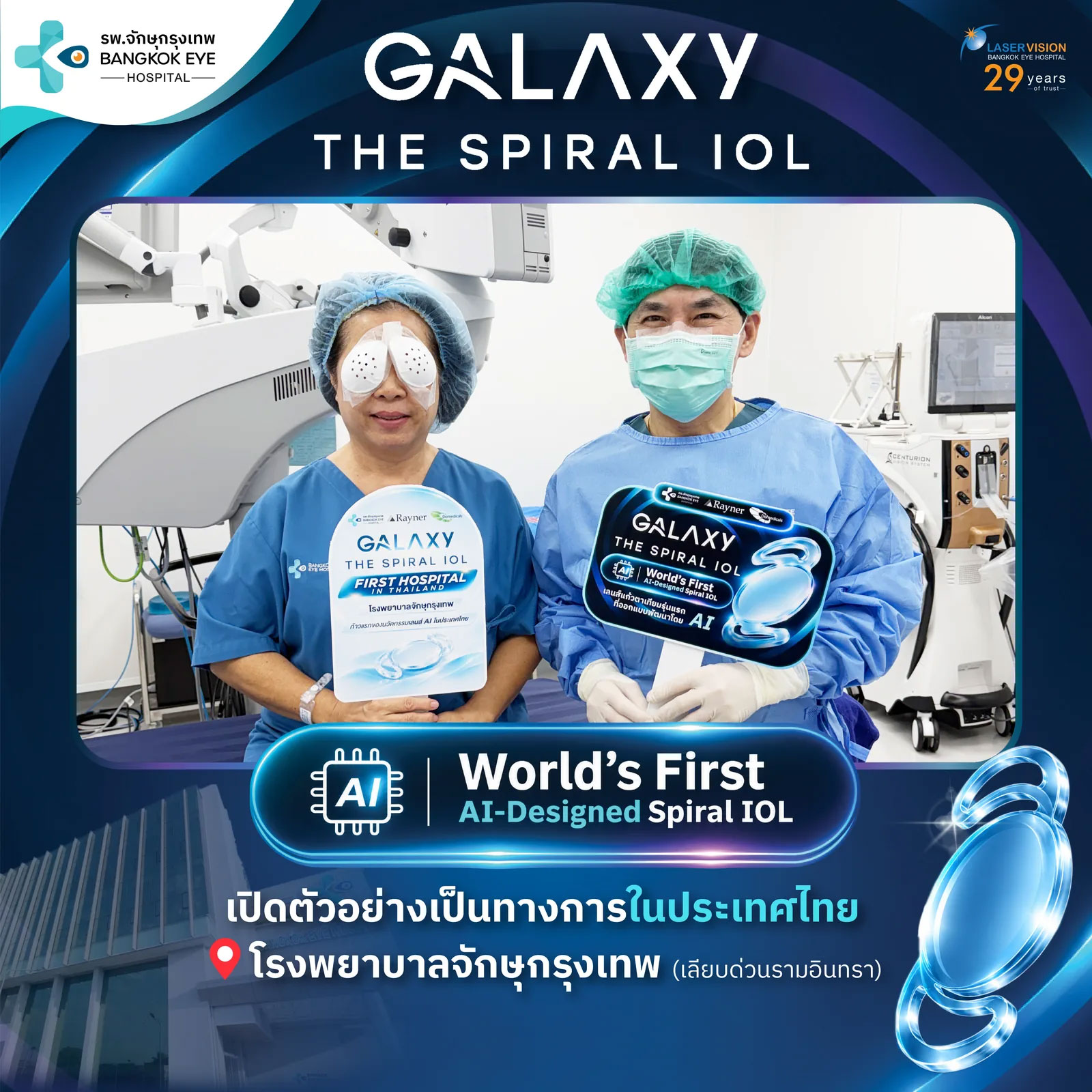
Bangkok Eye Hospital became the first hospital in Thailand to implant the GALAXY AI intraocular lens in a patient. The procedure was performed by Assoc. Prof. Anun Vongthongsri, MD, an ophthalmologist specializing in corneal and refractive surgery. Postoperative follow-up showed favorable visual outcomes for the patient, marking an important milestone in the clinical application of AI-designed intraocular lens technology in Thailand.
Bringing global innovation into clinical practice reflects Bangkok Eye Hospital's commitment to expanding treatment options by combining modern technology with ophthalmologists' expertise to achieve visual outcomes suited to each patient's individual needs.
*Treatment outcomes may vary from person to person.
What Is the GALAXY AI Intraocular Lens?
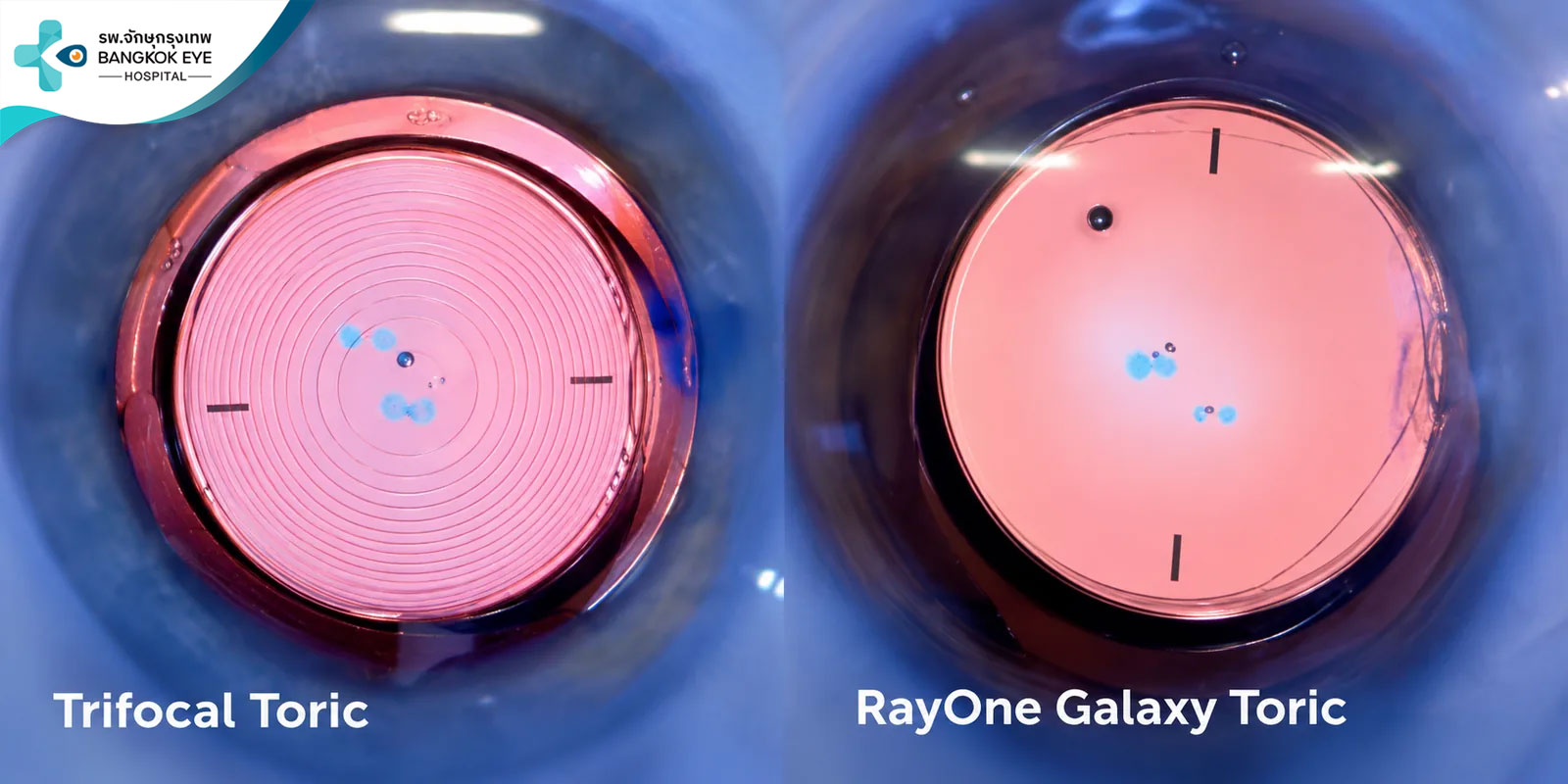
An intraocular lens (IOL) is an artificial lens implanted inside the eye to replace its natural crystalline lens. It is used in cataract surgery and refractive lens exchange (RLE) to correct long-sightedness.
GALAXY AI (RayOne Galaxy) is the world's first spiral intraocular lens designed with the assistance of artificial intelligence (AI). Its Non-Diffractive Spiral Optic differs from conventional multifocal lenses that use concentric rings and light diffraction. The technology is designed to provide a continuous distribution of optical power across far, intermediate, and near distances while reducing halos and glare and improving light efficiency for better visual quality. AI is used exclusively during the lens design and development process. The implanted lens does not contain an electronic chip or an AI system operating inside the eye.
4 Key Features of the GALAXY AI Intraocular Lens
(The following features are based on optical design information provided by the manufacturer. Individual visual outcomes may vary.)
1. Continuous Vision Across Far, Intermediate, and Near Distances

Conventional multifocal intraocular lenses typically use concentric rings to distribute light across three primary focal distances: far, intermediate, and near. In contrast, GALAXY AI uses a spiral optical design that distributes optical power continuously across these distances. This design supports everyday activities that require frequent changes in viewing distance, such as driving, checking the dashboard, working on a computer, reading, and using a smartphone.
2. Reduced Halos and Glare
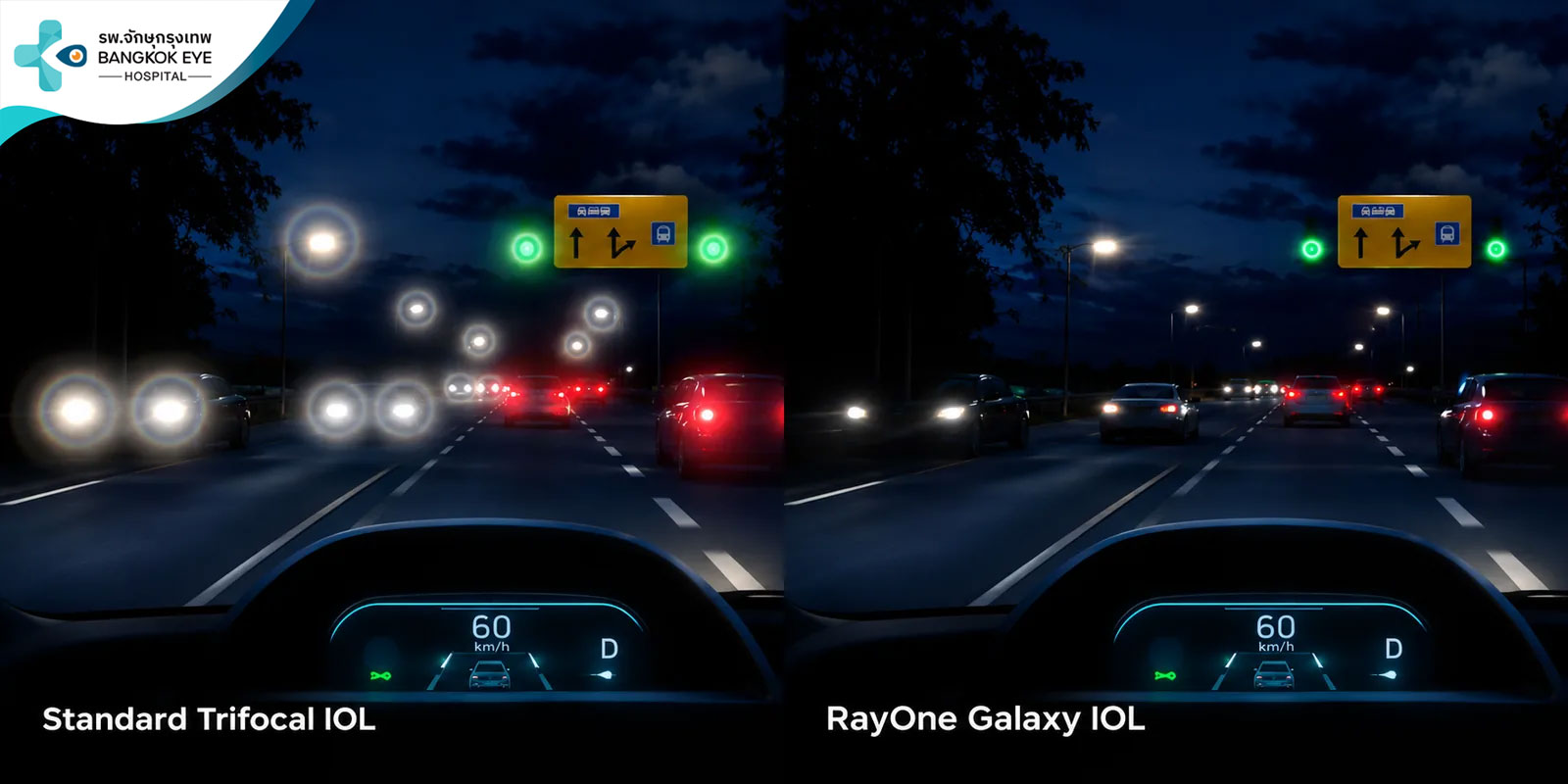
Simulated comparison of visual disturbances
Halos around lights and glare are visual disturbances that may occur after multifocal intraocular lens implantation, particularly in low-light conditions or while driving at night. GALAXY AI features Non-Diffractive Spiral Optic technology rather than the diffractive ring design used in conventional multifocal lenses. It is designed to reduce postoperative halos and glare while supporting vision across multiple distances. However, some patients may still experience these visual disturbances after surgery, and outcomes depend on individual eye conditions.
3. Reduced Light Loss and Improved Visual Quality (High Contrast)
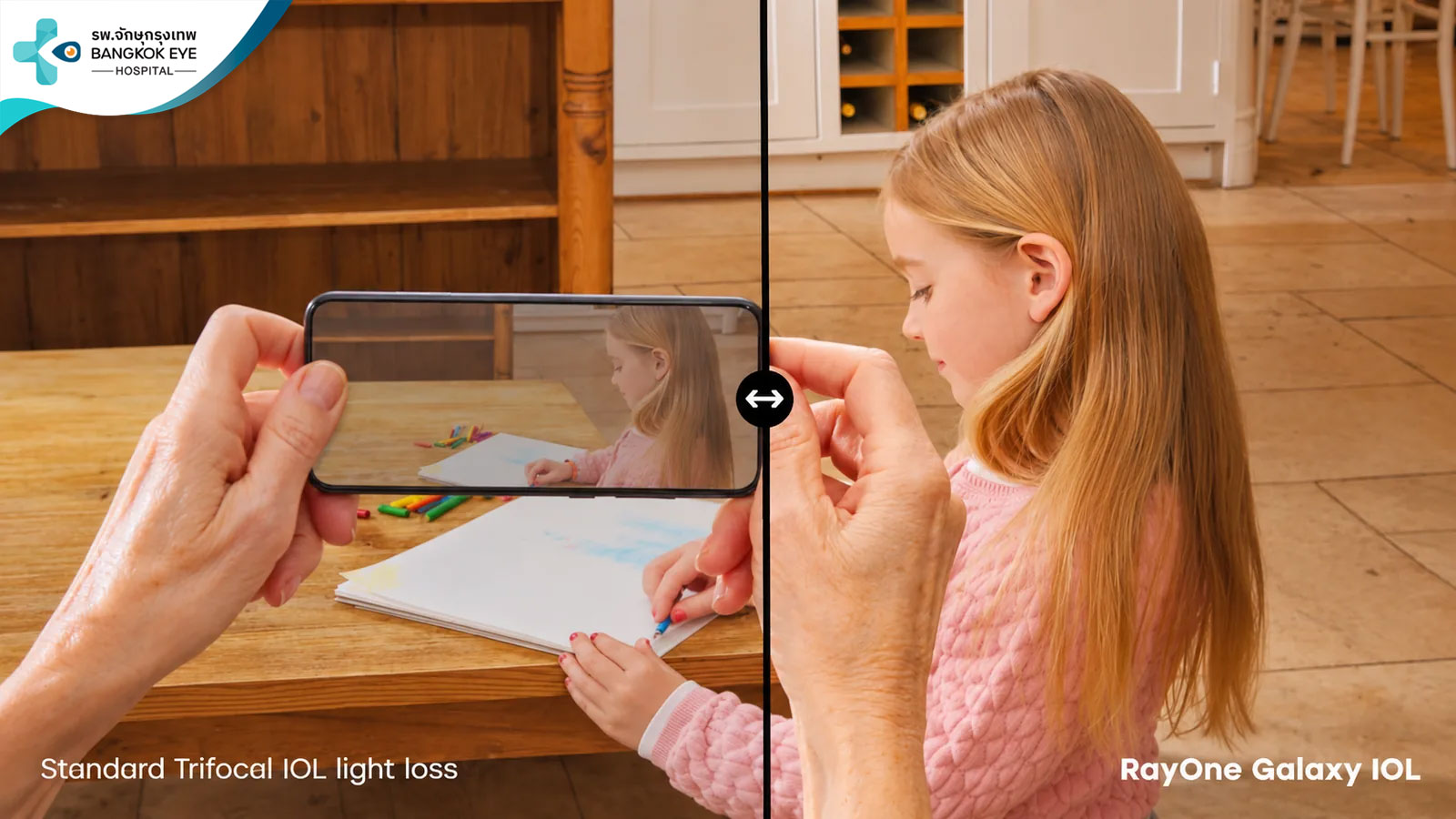
Simulated comparison of light loss in intraocular lenses
Conventional multifocal intraocular lenses typically use concentric rings to distribute light energy across different focal points, which may result in some loss of light energy. GALAXY AI features a Non-Diffractive Spiral Optic designed to minimize light loss associated with diffraction, improve light efficiency, and maintain good contrast.
"Good contrast sensitivity helps distinguish objects from their backgrounds and identify details in bright and dark areas. This is particularly important for everyday vision in low-light conditions."
Examples include driving at night, reading in dimly lit environments, and identifying objects with colors similar to their surroundings.
4. Astigmatism Correction
GALAXY AI is available in both non-toric and toric versions. The GALAXY AI Toric lens is designed for patients with corneal astigmatism. An ophthalmologist will assess the patient's eye health, measure their refractive error, and calculate the appropriate lens power based on their individual needs.
Comparison of Different Types of Intraocular Lenses
*Swipe left or right to view the full table on mobile devices.
| Type of Intraocular Lens | Range of Vision | Light Loss | Halos and Glare | ||
|---|---|---|---|---|---|
| Far | Intermediate | Near | |||
| Monofocal IOL | ✓ | Minimal | Low | ||
| Enhanced Monofocal IOL | ✓ | ✓ | Minimal | Low | |
| Selected Advanced Multifocal IOLs | ✓ | ✓ | ✓ | Moderate* | Moderate |
| AI-Designed Intraocular Lens RayOne Galaxy |
✓ | ✓ | ✓ | Minimal | Low |
*Depending on the technology used in each lens. Source: Rayner — GALAXY The Spiral IOL.
Explore differences in vision across viewing distances, including halos and glare at night.
Experience the Vision Simulator by Rayner
How does vision differ between types of intraocular lenses?
(The simulation is intended for educational purposes only and does not guarantee individual postoperative visual outcomes.)
International Recognition of the GALAXY AI Intraocular Lens
GALAXY AI was internationally introduced in 2024 at the European Society of Cataract and Refractive Surgeons (ESCRS) Congress in Barcelona, Spain. According to information provided by Rayner:
- GALAXY AI intraocular lenses have been implanted in more than 300,000 eyes worldwide.
- GALAXY AI is used in more than 75 countries.
- GALAXY AI received US FDA approval in 2026.
A study published in the Journal of Refractive Surgery in 2025 evaluated the lens's performance in providing continuous vision across multiple distances and reported reduced halos and glare in simulation tests compared with the RayOne Trifocal lens.
GALAXY AI was developed by Rayner, the company that pioneered the manufacture of the world's first intraocular lens in 1949 and continues to develop intraocular lens technology in the era of artificial intelligence.
Who Is a Suitable Candidate for GALAXY AI?
- Patients with cataracts who wish to reduce their dependence on glasses after surgery.
- Individuals with presbyopia who are suitable candidates for refractive lens exchange (RLE).
- Individuals who want vision across far, intermediate, and near distances.
- People with varied lifestyles that involve driving, working, reading, and traveling.
- Individuals concerned about halos and glare associated with multifocal intraocular lenses.
The choice of intraocular lens should take into account each patient's eye health, refractive error, visual needs, and lifestyle. Patients with dry eye disease, corneal conditions, glaucoma, or retinal disorders should undergo a comprehensive eye examination and assessment by an ophthalmologist.
Frequently Asked Questions About GALAXY AI (FAQ)
1. What is the GALAXY AI intraocular lens?
GALAXY AI is the world's first spiral intraocular lens designed with the assistance of artificial intelligence (AI). Its optical design aims to provide continuous vision across multiple distances, reduce halos and glare, and minimize light loss to support good visual quality and contrast sensitivity. AI is used only during lens development. There is no AI system operating inside the eye after implantation.
2. How is AI used in the design of GALAXY AI?
Artificial intelligence is used to assist in the design and development of the spiral optic. The AI system was trained using patient treatment outcome data to help analyze and refine mathematical formulas and optimize the continuous distribution of optical power across the lens surface according to its design objectives. The technology aims to provide a smooth, continuous range of vision across far, intermediate, and near distances while addressing limitations associated with halos and glare in certain multifocal intraocular lenses. It also aims to improve light efficiency and visual quality. AI helps make the research and development process more efficient and reduces development time. Its application is limited to the design and development process; the implanted lens contains no electronic chip or AI system.
3. Is GALAXY AI better than other types of intraocular lenses?
Each type of intraocular lens has its own advantages and limitations. GALAXY AI offers another option for patients seeking continuous vision across multiple distances, with an emphasis on reducing visual disturbances and maintaining visual quality. The most suitable lens should be selected based on individual eye health and visual needs.
4. Is GALAXY AI safe, considering it is a relatively new technology?
GALAXY AI was internationally introduced in 2024 and is supported by clinical research. However, as with any surgical procedure, there are potential benefits and risks. An ophthalmologist should assess each patient's suitability before proceeding with treatment.
5. How long does the GALAXY AI intraocular lens last?
Intraocular lenses are designed to remain inside the eye for the long term. They generally do not require replacement unless there is a specific medical indication.
6. Will I still need glasses after GALAXY AI implantation?
GALAXY AI is designed to reduce dependence on glasses for far, intermediate, and near vision. However, some patients may still require glasses for certain activities.
7. How long does it take to adjust to the GALAXY AI lens after surgery?
After surgery, the eyes and visual system need time to adapt to the new intraocular lens. This adjustment period may take approximately 4–6 weeks, although it varies from person to person. Visual quality may gradually improve during the postoperative period. Ocular surface health and dry eye conditions can also affect visual quality, making appropriate care before and after surgery important, along with scheduled follow-up appointments with your ophthalmologist.
8. How much does the GALAXY AI intraocular lens cost?
The cost depends on the lens model, surgical technique, and individual treatment plan. Prices start from THB 160,000 per eye. For pricing and package details, please contact Bangkok Eye Hospital (along the Ram Intra Expressway) at Tel: 02-511-2111 or LINE: @bangkokeyehospital.
References
- Rayner. Rayner announces launch of world's first spiral IOL designed with AI. 2024.
- Abela-Formanek C, et al. Performance of the First Spiral Refractive Intraocular Lens for Continuous Full Range of Vision. Journal of Refractive Surgery. 2025;41(11):e1213–e1222.
- Rayner. RayOne Galaxy Product Brochure, 2026.
- Rayner. RayOne Galaxy Patient Information Brochure.
Book an Appointment or Speak with Our Team
Bangkok Eye Hospital (Ram Intra Expressway)

*Disclaimer: This information is provided for educational purposes only and is not a substitute for medical diagnosis. If you experience any unusual eye symptoms, please consult an ophthalmologist.