

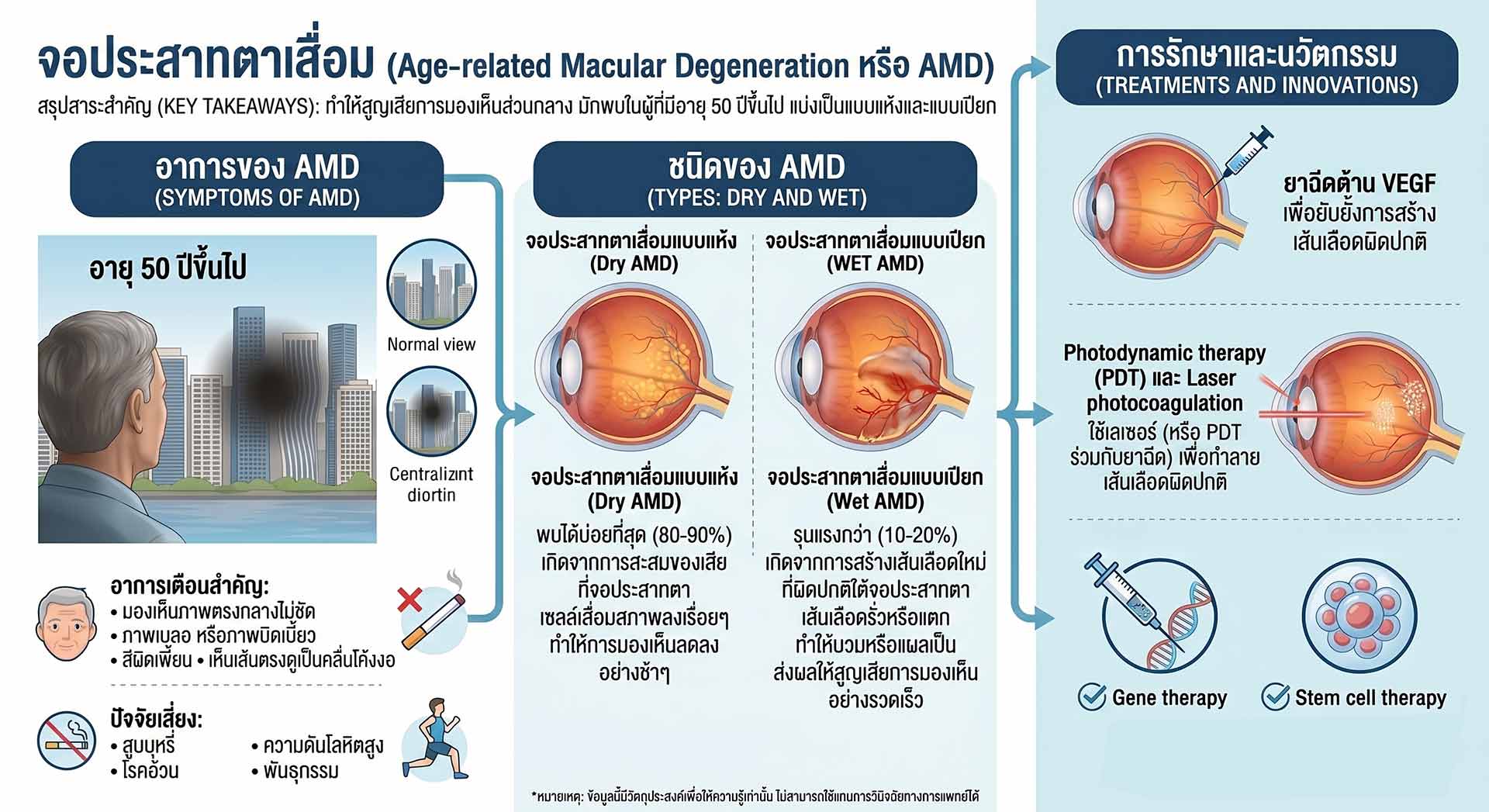
- Age-related Macular Degeneration (AMD) causes a gradual loss of central vision. It is commonly found in people aged 50 and older and is divided into two main types: Dry AMD (most common) and Wet AMD (more severe).
- Key warning signs include blurry central vision, distorted images, altered colors, or seeing straight lines as wavy or bent.
- Current treatment technologies include injections (Anti-VEGF), laser therapy to destroy abnormal blood vessels, surgery, and emerging technologies like Gene therapy and Stem cell therapy.
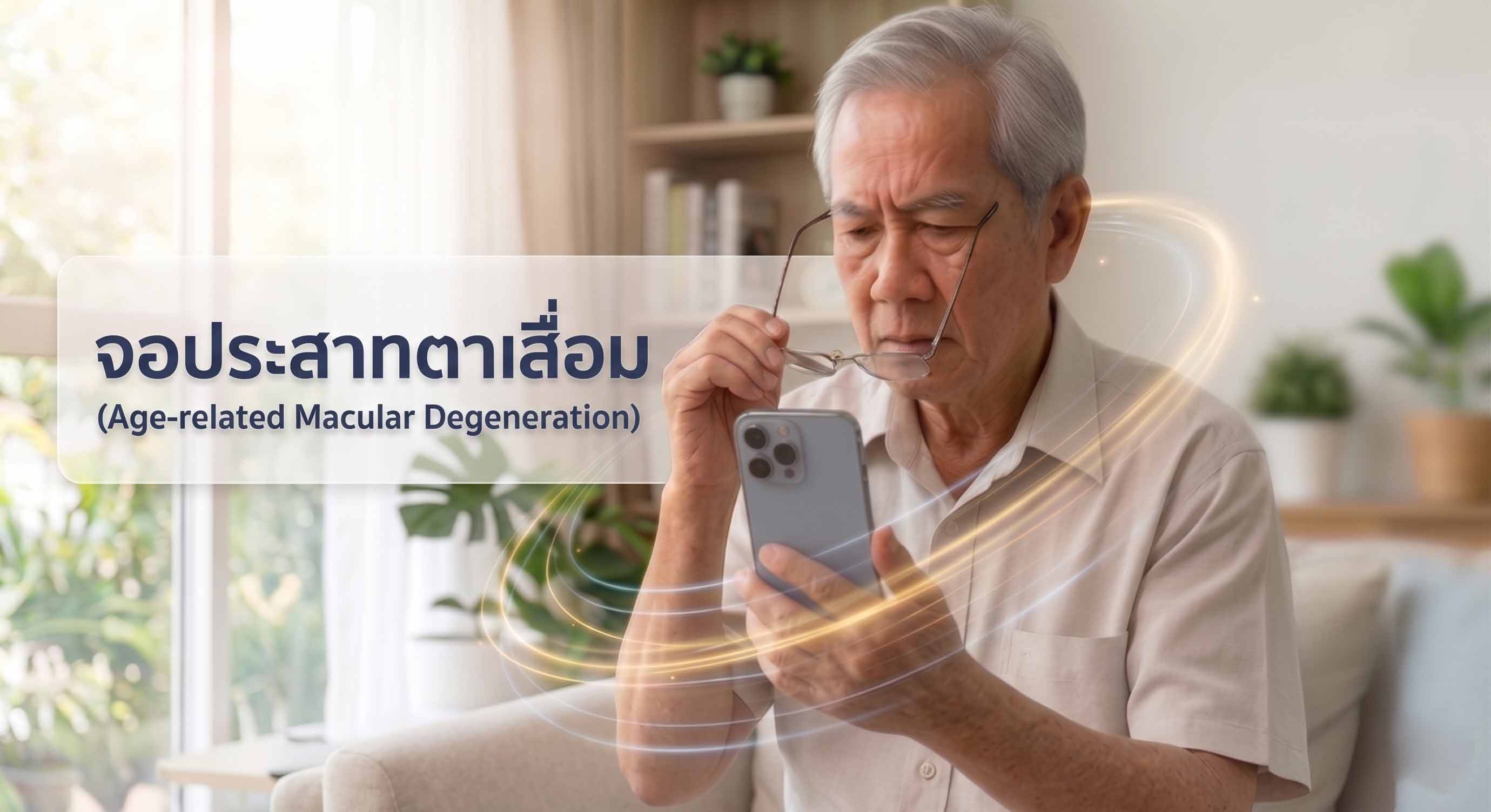
Age-related Macular Degeneration (AMD) is a disease caused by the deterioration of cells in the central area of the retina (Macula), which is the most critical part for vision. This leads to a gradual loss of central vision. It may start with blurry central vision, distorted images, or altered colors, eventually leading to a complete loss of central vision. Generally, AMD is commonly found in people aged 50 and older, and the risk increases with age. Other risk factors include smoking, high blood pressure, obesity, and genetics.
📌 Table of Contents
Two Types of AMD
- Dry AMD: The most common type (about 80-90%). It is caused by the accumulation of waste products in the retina, leading to the gradual deterioration of light-sensitive cells and a slow decline in vision.
- Wet AMD: Less common (about 10-20%) but more severe. It occurs when abnormal new blood vessels grow under the retina. These vessels may leak fluid or blood, causing swelling and scarring in the retina, resulting in rapid vision loss.
AMD is the third leading cause of vision loss in the elderly. Although there is currently no complete cure, there are treatment options and new technologies that can slow the progression and maintain the patient's quality of life.
What Are the Symptoms of AMD?
The symptoms of AMD depend on the stage of the disease. Dry AMD is divided into three stages: early, intermediate, and late. Symptoms typically worsen over time.
Early dry AMD usually has no symptoms. In intermediate dry AMD, some people may still have no symptoms, while others may notice mild symptoms such as slight blurring in the center of their vision or difficulty seeing in low light.
In late AMD (both wet and dry), many people notice that straight lines start to look wavy or bent. You may notice a blurry area near the center of your vision. Over time, this blurry area may expand, colors may not look as bright as before, and you may have more difficulty seeing in low light. Seeing wavy lines is a key warning sign of late AMD. If you notice this symptom, see an ophthalmologist immediately.
How to Reduce the Risk of Age-Related Macular Degeneration?
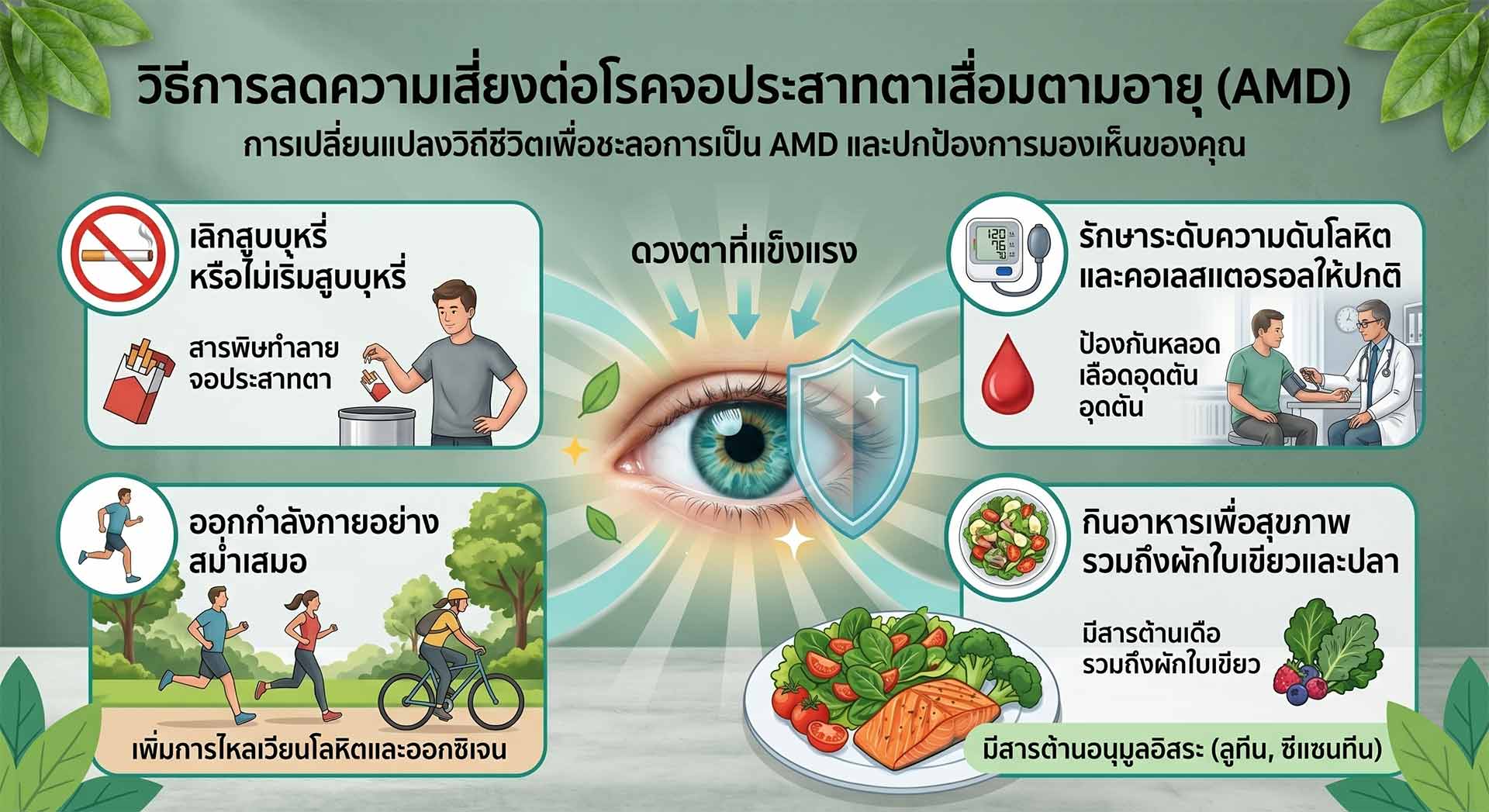
Several studies indicate that adopting the following habits may delay the onset of AMD (or slow down vision loss from AMD):
- Quit smoking or never start smoking
- Exercise regularly
- Maintain healthy blood pressure and cholesterol levels
- Eat a healthy diet, including leafy greens and fish
How Do Ophthalmologists Diagnose AMD?
Diagnosis typically involves a comprehensive eye exam, including pupil dilation, retinal examination, and retinal scanning using Optical Coherence Tomography (OCT).
AMD Treatment Options
1. Medications and Supplements
- Vitamins and minerals: Taking vitamins C, E, beta-carotene, zinc, and copper may help slow the progression of dry AMD in some patients.
- Injections: Anti-VEGF (Vascular Endothelial Growth Factor) drugs are the primary treatment for wet AMD. These drugs help inhibit the growth of abnormal new blood vessels.
2. Laser Therapy
- Photodynamic therapy (PDT): Uses a laser combined with an injected drug to destroy abnormal new blood vessels.
- Laser photocoagulation: Uses a laser to directly destroy abnormal new blood vessels.
3. Surgery
- Blood removal surgery: In cases of severe bleeding in the eye, surgery may be required to remove the blood.
- Retinal transplant surgery: A new technology that is still in the experimental stage.
Pros and Cons of Each Treatment
| Treatment Method | Pros | Cons |
|---|---|---|
| Vitamins and Minerals | Inexpensive and safe | Not effective for everyone; may have minor side effects |
| Injections | Highly effective in treating wet AMD | Requires regular injections into the eye; potential side effects |
| Laser Therapy | Effective at destroying new blood vessels | May damage surrounding normal tissue; not effective for everyone |
| Surgery | May help treat certain complications | Surgical risks involved; not effective for everyone |
Consult an Ophthalmologist for an AMD Treatment Plan
There are several treatments for AMD, each with its own pros and cons. Choosing the right treatment depends on the type and severity of the disease, as well as the patient's overall health. You should consult an ophthalmologist for the best advice and treatment plan.
 Line
Line New Technologies in AMD Treatment
- New injectable drugs: Longer-lasting injections that help reduce the frequency of treatments.
- Gene therapy: A treatment that involves inserting normal genes into retinal cells to repair damage.
- Stem cell therapy: Uses stem cells to generate new retinal cells.
Summary: There are several treatments for AMD, each with its own pros and cons. Choosing the right treatment depends on the type and severity of the disease, as well as the patient's overall health. You should consult an ophthalmologist for the best advice and treatment plan.
Frequently Asked Questions (FAQ) about AMD
How many types of AMD are there, and which is more dangerous?
It is divided into two main types: Dry AMD, which is the most common and progresses slowly, and Wet AMD, which is less common but much more severe, causing rapid vision loss due to bleeding or fluid leakage under the retina.
What does seeing wavy or bent straight lines indicate?
Seeing straight lines as distorted, wavy, or bent is a major warning sign of late-stage AMD. If you experience this symptom, you should see an ophthalmologist immediately for proper examination and treatment.
Can AMD be completely cured?
There is currently no complete cure, but there are treatment options (such as injections and laser therapy) and new technologies that can help slow the progression and preserve the patient's visual quality of life.
*Note: This information is for educational purposes only and cannot replace professional medical diagnosis. If you experience any abnormal symptoms, please consult an ophthalmologist directly.